
Blockchain
COVID-19 CRISIS: WHY THERE WILL BE NO “RETURN TO NORMAL” THIS SUMMER

With many in the sports betting and iGaming events industries still talking about a “return to normality in summer”, the truth is that despite the best efforts of politicians to string people along, there is no end in sight for the COVID-19 crisis.
As regular readers will know, here at AYO.NEWS we were covering the emerging crisis and discussing the possibility of global lockdowns way back in January. Despite most politicians and business leaders seemingly getting caught off-guard by the pandemic, it was obvious to anyone looking beyond the mainstream news that a virus as contagious as COVID-19 (coronavirus) would spark a global crisis.
Exactly as we predicted, the global travel shutdowns did come. But, driven by fear, hysteria, and computer modelling constructed from very weak and incomplete information, governments in many countries went even further, effectively shutting their economies and putting citizens under house arrest.
Ill-prepared health services and political incompetence caused the real problem
Egged on by politicians and their advisors, a mass propaganda campaign to “flatten the curve” and “save the health service from collapse” was implemented. This included what are completely arbitrary measures like the now universal “2m social distancing rule” – which many are almost religiously clinging to, despite it have next to no real value. Really, the only thing the 2m rule has done is show how woeful the general populations’ understanding of physics really is. The truth is that the distance the virus can spread in the air is utterly dependent on innumerable environmental factors, and leaving a 2m “safe distance” is nothing more than a placebo.
Now, as we stand at the start of May, through a combination of lockdowns and rapidly ramping up medical capacity, health services have categorically not been overwhelmed in most places. Sure, at the beginning the Italian and Spanish health systems did come close to collapse in a handful of regions – but that was because they were insanely ill-prepared for any surge – not because the pandemic hit particularly hard. Just look at better prepared and resourced countries like Germany, and, yes, even the UK.
Despite much talk about the National Health Service (NHS) being overwhelmed, the Nightingale hospital at London’s Excel exhibition centre, has received just a few dozen patients, and others, including the massive one set up at Birmingham’s NEC have not been used at all (and let’s not forget all those carefully choreographed and rehearsed TikTok dance routines). Now, this is not belittling the medical staff, at all. In fact, this author’s own sister works for the NHS, and has been drafted in, along with many of her colleagues to make Personal Protective Equipment (PPE).
But this gives a clue to the real problem here. Political and bureaucratic incompetence. Take the UK again. The death toll of 25,000+ sounds alarming, and is obviously awful for each individual and family affected. But, as much as people hate it, we have to look at the situation with rationality and not let decisions that have long-lasting, profound consequences for literally billions of people, be driven by emotion.
The huge majority of cases of COVID-19 are either completely asymptomatic, or very mild. Yes, it is extremely contagious, but unless you have an underlying condition, are in a vulnerable group, or are very unlucky, you are unlikely to be seriously affected by the virus. Of course, this hasn’t stopped the mainstream media running heart-breaking stories about terrible personal tragedies, zooming in on the rare exceptions, and painting an extremely disingenuous picture in the process.
The crisis in the health services have actually largely resulted from lack of equipment and basic supplies like PPE. Ridiculously cumbersome and inefficient public sector procurement and logistics systems, overseen by inept management and clueless politicians have caused the panics we’ve seen, and put medical and care staff at unacceptable risk.
A senior British Army source, talking to the UK’s The Times, newspaper summed things up well, saying:
“We know how knackered their [NHS logistics] systems are, but we’ve been surprised we’ve not been called in to help more, and we’ve been surprised by their failure to ration [kit]”

The absurdity of waiting for a vaccine
However, the measures being implemented globally mean no matter what your age or health, you are now certain to be affected economically. And let’s be totally clear here, when we refer to “economics” we are not exclusively talking about Wall Street traders, but rather normal peoples’ jobs, their ability to feed themselves and their families, and their children’s futures.
The truth is, that now, several months into the pandemic, we understand much more about the virus than we did in January. We know it is very contagious, and that the R0 number can be lowered with draconian lockdowns, travel restrictions and social distancing. But, we also know that, because there is no vaccine available, these measures are the only way to lower the R0 value. And that leads us to an inescapable reality, but one that the vast majority of politicians, business leaders and the general public seem unwilling to acknowledge right now.
The truth is, until an effective vaccine is 1) developed, 2) extensively tested, 3) mass produced, and 4) distributed globally, any easing of current lockdown measures will likely lead to resurgence of infection.
The problem is that an effective vaccine may never be developed for COVID-19, a virus that appears mutate and change very quickly, and even if by some miracle the perfect vaccine was developed right now, it could still be years before it was available in sufficient quantities to ensure widespread immunity globally.
Unprecedented economic collapse
Now, consider that globally the economic and travel shutdowns have already triggered what is likely to be the world’s worst economic catastrophe. Weeks ago the IMF concluded it would be the worst economic disaster since the Great Depression of the 1930s, while the UK government has said it expects the worst economic crash for 300 years, and in recent weeks the United Nations has warned about widespread famines of “biblical proportions“. And, as the lockdowns drag on, the projections are only getting worse.
Right now, in many countries, millions of staff are on furlough, getting subsidised by governments to stay at home. But this money won’t last forever, and it will need to be paid for in the future. It doesn’t take a genius to figure out that governments, businesses and individuals already struggling under crippling, record levels of debt, aren’t going to be helped in the long term by piling even more debt on top.
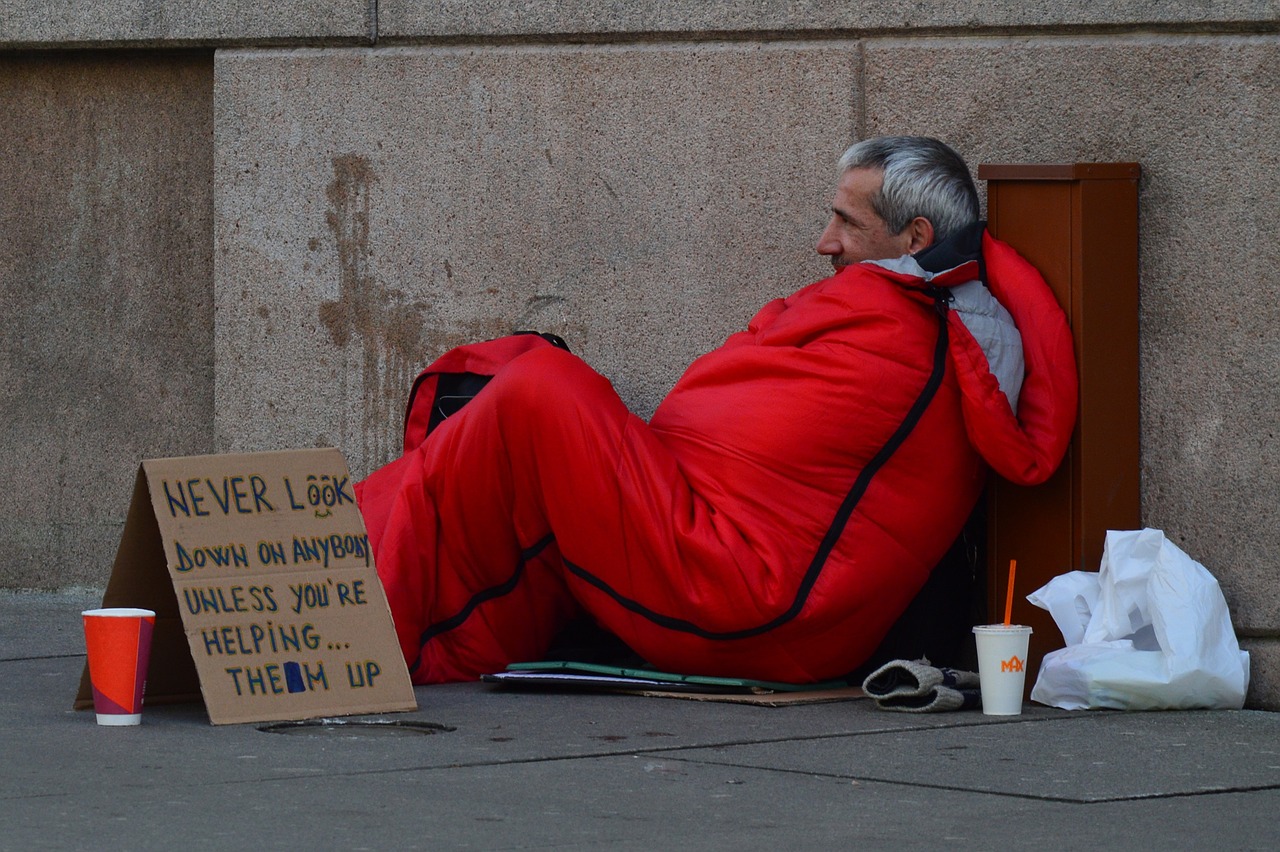
Of course, those currently furloughed would also do well to remember that businesses, large and small, still have overheads to pay, even if they are “hibernating” and aren’t generating revenue, and despite government support, many are going to collapse. Then those furloughed will transition to unemployment, and straight onto unemployment benefit. To put this in perspective; in the UK right now most furloughed staff are getting close to their regular salary, up to £2,500 per month. Unemployment benefit (Universal Credit), is under £400 per month for most. Will those currently supporting the lockdown feel the same when they make this transition?
The easing lockdowns farce
Right now many readers will probably be saying, “but the government said they are easing lockdown measures.” This is perhaps the biggest farce of all. It is entirely true that many governments are trying to do the impossible – maintain social distancing measures while reopening economies. However it is entirely ridiculous, and just making a bad situation worse.
First up, as long as the virus is circulating somewhere in the world, and mutating, there are very likely to be more waves. Unfortunately, many seem to be under the impression that if another wave hits it will be solely due to easing of lockdown restrictions. This has created a very dangerous belief, and one that ensures those places that do ease restrictions will periodically have to reintroduce them.
Yes, easing lockdowns will inevitably see a surge in infections – it is just logical. But there will be more waves of infections regardless, as the virus mutates and returns to a population that, as we are now almost certain, is incapable of developing long-lasting “herd immunity.” For, just as with other coronavirus types, like the common cold, any immunity developed is normally very short lived – hence why we are seeing so many cases of re-infection around the world. At this point it is worth noting that this inability to develop long-lasting immunity, also makes a mockery of plans for so-called “immunity passports” and other “smart” ways out of lockdown.
But there is a more fundamental reason why talk of “easing lockdowns” is basically smoke and mirrors. Take Spain as an example. One of the worst hit countries initially (again, due to being so ill-prepared in the first place), its government is now desperate to get its economy rolling again. Let’s zoom in to one particular sector that perfectly illustrates how deluded politicians are.
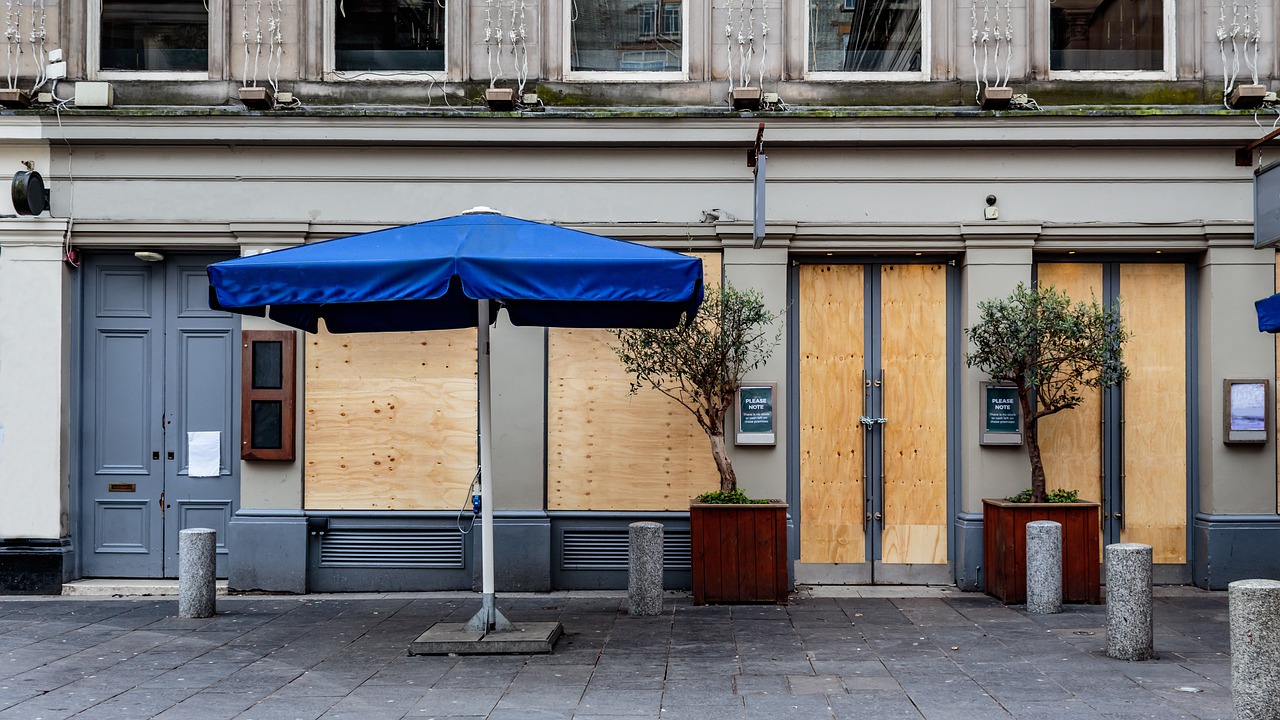
Tourism. So, from early May, hotels will be allowed to open. But, international travel is still basically shutdown. Where will the tourists come from? Next, though they can open, they can only operate at 30% capacity, and all communal areas will remain closed. Add to this that bars and restaurants will also only be allowed to operate at 30% capacity, and only on outside terraces. Beaches and other areas will still be policed for social distancing, and many entertainment and tourist venues will remain shut. Again, you don’t have to be great at maths to figure out that this is a “re-opening” in name only. Simply something to give politicians a way to make it look like things are getting better.
In reality, most hotels, bars, restaurants etc will find they can’t attract anywhere near enough customers to even cover operating costs, let alone turn a profit. Of course, because they are technically allowed to open, it will mean the governments can offload the burden of furlough pay, claiming people “can” go back to work. Businesses will simply stay closed, or try to open and soon collapse. Either way, those people are on the unemployed list.
Similar scenarios will be played out across myriad sectors and every country.
Global mass travel not resuming any time soon
Next, lets look at international travel. Right from the start of this crisis in January, we’ve been watching the airlines as the “canaries in the coal mine.” Because running an airline is all about future planning (from buying or leasing hugely expensive planes on finance, securing landing slots and routes, anticipating seasonal demand, and even buying fuel in advance to hedge against price fluctuations), what they do speaks volumes.
Take Norwegian Air Shuttle, which earlier this week said it expects its fleet to remain grounded for at least a year, or British Airways, Lufthansa and SAS, which have announced huge staff cuts, or Virgin Atlantic and Air France – KLM, which have said that they will not be able to continue to operate without bailouts worth many billions of euros.
Anyone can see that global mass air travel has been decimated. But, what about talk of re-opening air travel? Quite simply it is a joke. Plans for flights to operate at no more than 20%-30% capacity, leaving seats free to ensure “safe distancing”, are not only farcical from a health point of view, but will also be impossible for airlines to implement. Just as insane are plans to require travellers to turn up at airports 4 hours before flights so they can undergo health checks.
Does anyone seriously believe that, in an industry where profit margins are razor thin at the best of times (with fully packed planes), airlines will be able to operate viable businesses subject to these requirements? Furthermore, will anyone even want to travel?
Add in to the mix, the fact that millions of would-be travelers are going to have lost their jobs due to the economic crisis, and won’t be able to afford to travel, and those lucky ones who still can, will be very unlikely to find any insurance companies willing to cover COVID-19 related disruption. And that’s not all – remember, millions of travelers have been badly stung, and are still waiting for travel refunds; they aren’t likely to trust travel or insurance companies for a long time!
The truth is that, with these restrictions in place, air travel is going to get very uncomfortable, and very expensive. As airlines go under, and routes disappear, it will only get more expensive and inconvenient. Under these conditions, there can be no return to mass tourism or business travel. International sporting events, along with business conferences and exhibitions are going to be impractical for years to come.

Politicians have painted themselves into a corner
Inevitably, as the crisis drags on, the truth will dawn on more and more people. Unfortunately, politicians and advisors have “painted themselves into a corner.” Around the world, politicians and experts hesitated and missed the window to take action that could have been truly effective and minimally disruptive (like shutting down all travel from China in January). Then they panicked, and took draconian measures far too late, effectively painting themselves into a corner.
To change approach now and honestly admit to people that, in order to save what’s left of the global economy, social cohesion, public services and international peace, we will need to completely lift lockdowns and take our chances with the virus, would be to admit they were wrong, and make them appear liable for the destruction of their own economies. Of course, they will never do this.
Instead, most countries will continue on this ridiculous path of trying to maintain social distancing while “opening up” economies which, as we’ve already explained, is doomed to failure. This will just ensure further economic damage, risk massive social disintegration, and possibly even trigger wars.
Looking ahead
Unless the entire world, or at least large regions, lift the lockdowns and face the truth, then the big picture will just deteriorate.
It is true that some countries, especially those with advantageous geographical locations, including islands like Malta, Iceland and the Faroe Islands, may well be able to eradicate the virus in their communities. In those countries the local economies may be able to open up properly again, but, their governments will not be able to allow mass international travel to resume, for fear of reintroducing the virus.
In larger countries more geographically exposed to infection, like the UK, Germany, France, Spain and Italy, we will likely see something similar to what has happened in parts of China, or Singapore – where lockdowns were lifted in one place, only to be reintroduced in others.
Looking across the Atlantic to the United States, a powder keg is set to explode. Trump, love him or loathe him, at least seems to have understood that staying in lockdown will cause damage magnitudes of order greater than the virus. However, governors in many states seem to be determined to follow the European lockdown model, and this is setting the stage for a second civil war.
Out of all this uncertainty, a couple of salient points for the industries we cover here at AYO.NEWS emerge quite clearly:
- Disruption to the global sporting calendar will continue for many months, or maybe even a year or more. There will definitely be no “return to normal” this summer.
- Expos and conferences, which are such an integral part of the iGaming industry, cannot realistically expect to be viable again for years.
- Gambling operators should be taking a much more long-term view of their sports alternatives, like esports and virtual sports.
- Those countries and jurisdictions with economies dependent on foreigners, (whether as tourists, entrepreneurs, or staff), like Malta and Curacao, need to retain the businesses still functioning and appreciate they will be more dependent on them than ever.

A final thought
These are incredibly difficult times for the world, and there are some extremely tough choices. But people need to stop hiding behind virtue signalling and artificially simple constructs and soundbites.
Just as those supporting lifting lockdowns have to understand it will inevitably cause many thousands of people to die prematurely, those supporting continued draconian lockdowns need to understand that they are supporting a course of action which will cause more long-term misery, suffering and deaths than COVID-19 ever could.
There is no “good” option.
AYO.NEWS says features the opinion of the author and does not necessarily reflect the views of Pentagon Digital Limited.
All original content featured on this site is © Pentagon Digital Limited, 2020.
READ MORE: CANZUK: THE IDEAL UNION FOR THE DIGITAL AGE OF COVID? | ENABLING DIGITAL GHETTOIZATION? TECH COMPANIES LOSE SIGHT OF BIG PICTURE IN RACE TO LIFT LOCKDOWNS
Blockchain
VCOIN LAUNCHES DEBIT CARD WITH UPHOLD: IMVU USERS EARN IN-GAME & SPEND IN REAL LIFE
VCOIN has teamed up with Uphold on a debit card that lets IMVU users spend currency earned in-game on real-world purchases.
VCOIN, the transferable digital currency used in the social metaverse app IMVU, has launched a debit card in partnership with digital money platform Uphold, allowing users to take value earned inside the virtual world and spend it in real life.
IMVU users can now withdraw VCOIN to an Uphold account and spend it using the Uphold debit card, earning 2% cashback on every purchase, both online and in store.
How the card works
The card is available first to US residents, with international availability to follow. Digital-only cards are free to order and use through the Uphold Card app, while a physical card carries a one-off fee of $9.95. Cashback on purchases is paid into the cardholder’s Uphold account.
From virtual economy to real wallet
VCOIN was first introduced inside IMVU, the friend-discovery and social metaverse app operated by Together Labs. IMVU runs one of the larger virtual economies of any social platform, with around 27 million transactions and 14 billion credits changing hands each month, according to the company.
The debit card closes the loop between that in-app economy and everyday spending. Creators and users who earn VCOIN by selling virtual goods or participating in the community can now convert those earnings into money they can use at ordinary merchants, rather than keeping the value locked inside the app.
A test case for the creator economy
The launch reflects a wider effort across gaming and virtual worlds to let users earn real income from in-game activity. It also highlights the regulatory hurdles involved: by routing withdrawals and spending through Uphold, an established and regulated money platform, VCOIN relies on a partner already set up to handle compliance, identity checks and card issuing.
How widely users adopt the card will be watched closely by other platforms considering whether to let virtual currencies flow out into the real economy.
English Premier League football club Wolverhampton Wanderers (Wolves) has entered the Rocket League Championship Series (RLCS).
Wolves already fields rosters in FIFA 21, FIFA Online 4, PUBG, Identity V, and Pop Kart Racing, and is the first Premier League club to enter the RLCS.
Discussing the news Wolves General Manager for Marketing and Commercial Growth, Russell Jones, said:
“Gaming and esports remain a crucial part of our brand growth strategy and signing such talented and ambitious players to represent our Rocket League esports team is another step forward in our journey to build stories outside of football and widen the appeal of the Wolves brand across the world.
“We have spent the last six months scouting teams and players and are delighted to welcome Rix, Luis and Ole, who will become Wolves Esports for the remainder of the current RLCS season X and beyond. We will be offering the team our full support as they compete in the winter split.
“I’d also like to thank the University of Wolverhampton who continue to be an exceptionally supportive partner of the Wolves Esports programme.”
While Team Captain of Wolves Esports Rocket League, Rix Ronday, added:
“It is a real honour to captain the first-ever Wolves Esports Rocket League team. I’m confident that we have recruited two of Rocket League’s most exciting talents in Ole and Luis and we are working hard behind the scenes to prepare for the RLCSX Winter Split kick-off.”
AYO.NEWS says:
Wolves have already demonstrated their enthusiasm for esports, using it to strengthen what is now a powerful global brand – for example, way back in February 2019, it became the first Premier League club to enter Chinese esports, through a partnership with Weibo eSports Club.
And, given the very real possibility of COVID-19 causing further disruption to football, diversifying the brand into multiple esports seems like a smart way to ensure fan engagement can continue, come what may.
‘AYO.NEWS says’ features the opinion of the author and does not necessarily reflect the views of Pentagon Digital Limited or its affiliates or associates.
All original content featured on this site is © Pentagon Digital Limited, 2020.
The EA SPORTS™ FIFA 21 Challenge has smashed the viewership record, with an Average Minute Audience of over 250K.
A one-day esports tournament that paired top global professional footballers with the world’s best FIFA players, the EA SPORTS™ FIFA 21 Challenge drew an average minute audience (AMA) of 254,057 with a total watch time of 1,024,696 hours, making the event the most-watched EA operated esports broadcast in history.
In fact, the broadcast more than doubled the viewership metric set by the next most-watched EA operated FIFA event, the FIFA Global Series FUT Champions Cup: Barcelona, which took place over multiple days in January 2018 and registered an AMA of 92,678.
During the competition, four esports players paired with four professional footballers from international clubs Liverpool, West Ham United, Inter Milan, and Borussia Dortmund, clashed on October 29 for the EA SPORTS FIFA 21 Challenge.
Liverpool’s Trent Alexander-Arnold and Fnatic’s Tekkz took home the trophy and won $20,000 on behalf of their selected charities
In addition to incorporating celebrity participation to reach non-traditional gaming audiences, the EA SPORTS FIFA 21 Challenge was the first event to utilize FIFA Global Series Viewership Rewards, creating an interactive broadcast for viewers with in-game benefits for watching to further drive engagement and subsequent play time.
Reflecting on the event EA SPORTS FIFA Commissioner, Brent Koning, said:
“EA SPORTS FIFA is woven into the fabric of football culture. Bringing professional footballers and our esports pros together creates entertainment that sets our tournaments apart.
“The success of the FIFA 21 Challenge reinforces our strategy and vision for broadening the esports audience, creating content for our fans, and underscores the value of entertainment-driven events that branch outside of traditional esports.”
The FIFA 21 Challenge was a part of a series of EA SPORTS FIFA 21 Global Series pre-season invitationals, featuring notable influencers, footballers, and FIFA pros, in partnership with the interactive entertainment world’s biggest video streaming and content platforms.
It’s a nod to EA’s renewed competitive gaming strategy, which leverages the convergence of traditional sports, competitive gaming, and pop culture to create new, engaging, and accessible broadcasts for diverse audiences.
AYO.NEWS says:
Viewership figures like this illustrate just how integrated esports, especially FIFA, is becoming in mainstream football culture, and the growth looks set to continue, and reflects well on EA’s competitive gaming strategy. Last month, EA announced improvements and a bigger prize pool for the upcoming esports season.
‘AYO.NEWS says’ features the opinion of the author and does not necessarily reflect the views of Pentagon Digital Limited or its affiliates or associates.
All original content featured on this site is © Pentagon Digital Limited, 2020.


INDIA SUPREME COURT REJECTS JUNGLEE REVIEW OF STATE GAMING BANS

RUSH STREET INTERACTIVE Q3 REVENUE RISES 39% TO $385.9M

VEIKKAUS TO TAKE NEW VIABET BRAND INTO DENMARK IN JULY 2027

DUTCH LICENSED GAMBLING MARKET SHRINKS TO €4.1BN AS ONLINE REVENUE FALLS

KALSHI RAISES $1BN AT $40BN VALUATION AS SENATORS PRESS ON ELECTION MARKETS

SIR PHILIP DAVIES JOINS BHA BOARD AS RACECOURSE ASSOCIATION NOMINEE

FINNISH POLICE STEP UP FINES FOR ILLEGAL GAMBLING MARKETING

MATCHBOOK BUYS BETDAQ, MERGING TWO VETERAN BETTING EXCHANGES

HACKSAW LAUNCHES B2B PREDICTION MARKETS PLATFORM WITH MGA TYPE 3 NOD

ALTURAS RANCHERIA’S KALSHI DEAL SPLITS CALIFORNIA TRIBES ON PREDICTION MARKETS
INDIA SUPREME COURT REJECTS JUNGLEE REVIEW OF STATE GAMING BANS
RUSH STREET INTERACTIVE Q3 REVENUE RISES 39% TO $385.9M
VEIKKAUS TO TAKE NEW VIABET BRAND INTO DENMARK IN JULY 2027
DUTCH LICENSED GAMBLING MARKET SHRINKS TO €4.1BN AS ONLINE REVENUE FALLS
KALSHI RAISES $1BN AT $40BN VALUATION AS SENATORS PRESS ON ELECTION MARKETS
-
 People3 weeks ago
SIR PHILIP DAVIES JOINS BHA BOARD AS RACECOURSE ASSOCIATION NOMINEE
-

 Esports5 years ago
LEXUS SUPPORTS ESPORTS AWARDS FOR THIRD CONSECUTIVE YEAR
-

 Esports5 years ago
REKTGLOBAL BRINGS TOP GAMING TALENT TO INFINITY FESTIVAL 2021
-
Esports6 years ago
MEDIA & ESPORTS POWERHOUSE REKTGLOBAL ACQUIRES TALENTX ENTERTAINMENT
-
Esports6 years ago
ENVY GAMING LAUNCHES CONTENT CREATOR NETWORK, SIGNS CHESS STREAMING BOTEZ SISTERS
-

 Esports5 years ago
AWARD POOL PLATFORM TO EMPOWER BRANDS & CREATORS WITH CHALLENGES & NFT-BASED REWARDS
-
 Staying Legit3 weeks ago
FINNISH POLICE STEP UP FINES FOR ILLEGAL GAMBLING MARKETING
-
Esports5 years ago
MIDDLE EAST MERGER: GALAXY RACER & TEAM NIGMA FORM ‘NIGMA GALAXY’