
iGaming
SOUTH AFRICAN TV OPERATOR MULTICHOICE PAYS $81M FOR 20% STAKE IN NIGERIAN OPERATOR BETKING

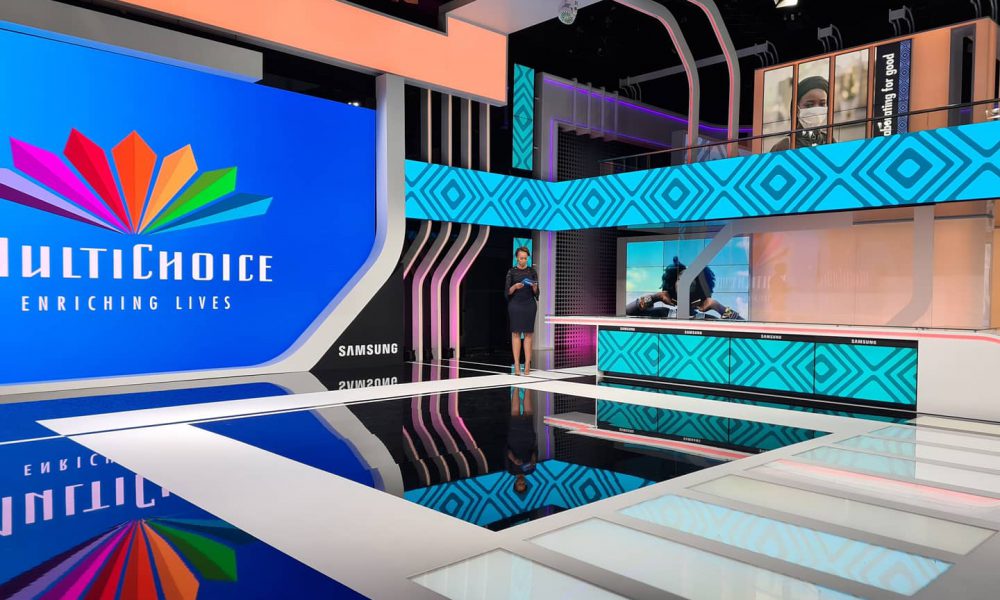
South African pay TV operator Multichoice has acquired a 20% stake in Nigerian sports betting company BetKing, in an $81M USD deal.
The agreement also provides for earn-out payments of up to $31M if the operator meets specific targets between December 2022 and December 2024.
Nigeria-based BetKing is also active in Ethiopia and Kenya – which it entered in June 2020, when it also agreed a five-year $11M deal to sponsor the Football Federation Kenya, replacing former sponsor SportPesa.
Though Multichoice has said it intended to introduce new products and services to power growth, it has said it intends to pull the plug on European soccer rights deals.
AYO.NEWS says:
The homegrown African betting and gaming industry seems to be waking up at last, as it realises the immense potential of an increasingly online population. Earlier today we reported that African operator Sahara Games has launched an omni-channel solution in partnership with Pronet Gaming in Uganda, and intends to roll it out in Kenya and Nigeria shortly.
‘AYO.NEWS says’ features the opinion of the author and does not necessarily reflect the views of Pentagon Digital Limited or its affiliates or associates.
All original content featured on this site is © Pentagon Digital Limited, 2020.
iGaming
NEW BRUNSWICK WEIGHS OPENING ONLINE GAMBLING TO PRIVATE OPERATORS
New Brunswick’s finance minister says the province is exploring options to regulate private online gambling operators, which could end Atlantic Lottery’s monopoly in the province.

New Brunswick is exploring whether to license private online gambling operators, raising the prospect of a third Canadian province following Ontario and Alberta into a competitive igaming market.
Finance Minister René Legacy confirmed the review in a statement to Brunswick News, saying the “government is exploring options around regulating private online operators”. The Telegraph-Journal first reported the move. No timeline, preferred model or legislation has been announced, and the existing framework remains in place.
Atlantic Lottery’s position
Legal online gambling in New Brunswick is currently offered only through Atlantic Lottery Corporation (ALC), the Crown corporation jointly owned by New Brunswick, Nova Scotia, Prince Edward Island, and Newfoundland and Labrador. Opening the market would end that monopoly in the province and could complicate the four-province arrangement under which ALC operates.
ALC has estimated that unregulated gambling websites take more than CA$250m a year out of Atlantic Canada. Provincial budget documents show New Brunswick’s government lottery revenue has fallen by around CA$8m over the past two years, according to reports.
An ALC spokesperson, Greg Weston, said decisions about the region’s gambling framework “ultimately rest with the provincial governments that own the corporation”.
Models on the table
Officials are reviewing how other provinces and jurisdictions regulate the sector. Ontario opened its market to private operators in April 2022 through iGaming Ontario, while Alberta’s regime went live this year, with its grace period for grey-market operators ending on 13 October with around 50 sites live.
Michael Naraine, an associate professor of sport management at Brock University, has suggested that the Atlantic provinces could partner with Quebec to create a larger regulated market. He also pointed to New York’s mobile sports betting model, which limits the number of operators and taxes gross gaming revenue at 51%, as one alternative to Ontario’s open licensing approach.
The Canadian Alliance for Regulated Gaming, which represents operators, has not backed a particular model. Executive director Molly Cormier stressed the importance of oversight, player safeguards and enforcement, and raised concerns about gambling advertising reaching consumers in provinces where operators are not licensed.
What comes next
Several practical questions would follow any decision to open up. The province would need to choose a regulator and a licensing body, settle a tax rate, and decide what role ALC would play as one operator among many, as provincial lotteries in Ontario and Alberta continue to do alongside private licensees. It would also need a plan for the offshore sites already serving New Brunswick players, which in Alberta has meant a defined grace period followed by enforcement against operators that did not apply for a licence.
Premier Susan Holt’s government has made no commitment beyond the review, and any move to license private operators would require new legislation. However, the combination of falling lottery returns and offshore leakage that drove change in Ontario and Alberta is now clearly on the agenda in Fredericton.
For operators already licensed in Ontario and Alberta, a New Brunswick market would be modest in size, with a population of under one million, but it could open the door to a wider Atlantic Canada framework if the other ALC shareholder provinces follow.
iGaming
SPAIN SWITCHES ON CROSS-OPERATOR DEPOSIT LIMITS AND PLAYER PORTAL
Spain’s DGOJ has launched a test version of its joint deposit limit system, capping players at €700 a day across all licensed operators by default, alongside a new Player Portal.
Spain’s gambling regulator has launched a test version of its joint deposit limit system, which will cap how much each player can deposit across every licensed online operator combined, alongside a new Player Portal that gives individuals a single view of their gambling activity.
The Directorate General for the Regulation of Gambling (DGOJ), part of the Ministry of Social Rights, Consumer Affairs and Agenda 2030, opened both tools on Wednesday 21 October. The system will be mandatory from late March 2027, when the test phase ends.
How the limits work
By default, every player will be limited to €700 a day, €1,750 a week and €3,300 over any four-week period, counted across all the DGOJ-licensed operators where they hold an account. Until now, Spain’s limits have applied operator by operator, and those per-operator caps of €600 a day, €1,500 a week and €3,000 a month remain in place alongside the new system.
Players can change or remove the joint limits voluntarily, but only through a specific procedure that includes reinforced information about gambling risks. Any change takes three working days to take effect, and a limit can be raised only once every three months. The regulator’s day runs from 06:00 to 06:00, and its week from 06:00 on Tuesday.
Operators must connect to the central system and check it before accepting any deposit. They may not accept a deposit that would breach a player’s joint limit and must tell the player when one is refused. The DGOJ acts as the single verification point, so operators do not exchange player data with one another.
A single view for players
The Player Portal brings together a person’s deposits, stakes, winnings and losses across all authorised Spanish operators, with activity trends and history. Users can see which gambling accounts are registered to their identity, which the regulator says will help spot identity theft, set their own spending and activity alerts, manage their joint limits and download annual activity certificates. Access is free through the government’s Cl@ve digital identity system.
Legal basis and rationale
The framework was created by Royal Decree 520/2026, approved by the Council of Ministers on 23 June and published in the Official State Gazette two days later. It inserts a new Article 36 bis into Royal Decree 1614/2011, which governs licensed online gambling.
The decree’s preamble cites regulator data showing that around a third of active online players in Spain hold accounts with more than one operator, and that roughly 80% of accumulated losses are concentrated among 10% of players. The ministry says the joint limits are aimed squarely at that multi-account group.
The regulator is the data controller for the system, which processes identity details, contact information, the limits each player has set and their deposits. The decree bars the processing of special-category data such as health or biometric information, and requires data to be deleted once its purpose has been fulfilled. DGOJ director general Mikel Arana and Justo Sancho, head of its safe gambling control division, presented the tools to industry at the Gaming in Spain Conference in Madrid on 15 October.
Operators’ association Jdigital has questioned the measure, arguing that it adds complexity for licensed operators to address a minority of players and warning that further restrictions could push customers towards unlicensed sites.
Next steps
The launch comes as the DGOJ works through a broader safer-gambling agenda. Earlier this month the regulator reopened its consultation on risk-detection algorithms, and it has said an impact analysis of the 2020 advertising decree will be published in the coming weeks. For operators, the immediate task is integration: every licensee will need to be connected and checking the central limit before the system becomes binding next spring.
iGaming
FDJ UNITED CUTS 2026 OUTLOOK AGAIN AS TAXES AND JACKPOTS HIT REVENUE
FDJ United now expects a mid-single-digit fall in 2026 revenue after nine-month revenue dropped 5.6% to €2.58bn, hit by higher gaming taxes, weak EuroMillions jackpots and its UK and Dutch online business.
FDJ United has lowered its 2026 guidance for the second time in three months, after higher gaming taxes, a weak EuroMillions jackpot cycle and soft trading in its UK and Dutch online businesses pushed nine-month revenue down 5.6%.
The French lottery and betting group reported gross gaming revenue (GGR) of €6,264m for the nine months to the end of September, down 2.8% year on year, and revenue of €2,576m, according to its trading statement published on Wednesday evening. Third-quarter revenue fell 8.1%, iGaming Business reported.
New guidance
FDJ United now expects a low-single-digit decline in GGR for 2026 and a mid-single-digit decline in revenue. In July it had guided for stable GGR and a low-single-digit fall in revenue, having already trimmed its outlook in April. The group said it would hold its recurring EBITDA margin at around 23% through cost control, and confirmed its target of increasing the annual dividend, with a payout of at least 75% of adjusted net profit.
The April revision had already moved the group from forecasting a slight increase in revenue to a slight decline, and lowered its recurring EBITDA margin target to between 23% and 24% from around 24.5%. The latest update therefore settles the margin at the bottom of that range.
Taxes are a large part of the story. Higher gaming taxes cost the group €62m over the nine months and account for more than two percentage points of the revenue decline, the company said. The revised full-year outlook includes more than €70m of additional gaming taxes.
Chairwoman and chief executive Stéphane Pallez said that “in this challenging environment, the Group remains fully committed” to its transformation plan.
Lottery and retail betting
The French lottery and retail sports betting unit generated GGR of €4,978m, down 3.5%, and revenue of €1,794m, down 4.8%. Within that, lottery GGR fell 3.5% to €4,365m. Instant games grew 1.9%, but draw games dropped 10.3%, reflecting fewer and smaller EuroMillions jackpot runs against a strong 2025 comparison, as well as lower footfall at points of sale. The company pointed to unfavourable economic conditions as a factor in weaker retail traffic, a trend that weighs on both its lottery and its betting counters.
Retail sports betting GGR declined 3.2% to €613m, with revenue down 4.5% to €297m. The group operates France’s monopoly on point-of-sale sports betting, a market in which the regulator has recently published data showing stakes concentrated among higher-risk players.
Online arm drags
The online betting and gaming unit, which includes the former Kindred business acquired in 2024, reported GGR of €1,013m, down 0.8%, while revenue fell 8.2% to €619m. Excluding the Netherlands and the UK, GGR rose 5.7% and revenue edged up 0.8%. The group said action plans are in place in both markets and should gradually restore performance.
The update drew a cool reception from market commentators, with MarketScreener running its analysis under the headline “Nothing’s going right”.
Why it matters
FDJ United’s update shows how quickly rising gaming taxes are feeding through to listed operators’ guidance in Europe, alongside the familiar volatility of jackpot-driven lottery revenue. With the UK’s higher remote gaming duty already prompting restructuring elsewhere in the sector, investors will be watching whether the group’s UK and Dutch recovery plans can start to deliver in the fourth quarter.


PREMIER LEAGUE SHIRT BAN CUT GAMBLING EXPOSURE BY ONLY 10.5%, STUDY FINDS

NEW BRUNSWICK WEIGHS OPENING ONLINE GAMBLING TO PRIVATE OPERATORS

SPAIN SWITCHES ON CROSS-OPERATOR DEPOSIT LIMITS AND PLAYER PORTAL

FDJ UNITED CUTS 2026 OUTLOOK AGAIN AS TAXES AND JACKPOTS HIT REVENUE

UTAH SUES KALSHI IN STATE COURT, CALLING ITS MARKETS A PUBLIC NUISANCE

SIR PHILIP DAVIES JOINS BHA BOARD AS RACECOURSE ASSOCIATION NOMINEE

NFL ASKS SUPREME COURT TO LET STATES REGULATE SPORTS PREDICTION MARKETS

MATCHBOOK BUYS BETDAQ, MERGING TWO VETERAN BETTING EXCHANGES

ALTURAS RANCHERIA’S KALSHI DEAL SPLITS CALIFORNIA TRIBES ON PREDICTION MARKETS

FINNISH POLICE STEP UP FINES FOR ILLEGAL GAMBLING MARKETING
PREMIER LEAGUE SHIRT BAN CUT GAMBLING EXPOSURE BY ONLY 10.5%, STUDY FINDS
NEW BRUNSWICK WEIGHS OPENING ONLINE GAMBLING TO PRIVATE OPERATORS
SPAIN SWITCHES ON CROSS-OPERATOR DEPOSIT LIMITS AND PLAYER PORTAL
FDJ UNITED CUTS 2026 OUTLOOK AGAIN AS TAXES AND JACKPOTS HIT REVENUE
UTAH SUES KALSHI IN STATE COURT, CALLING ITS MARKETS A PUBLIC NUISANCE
-
 People1 week ago
SIR PHILIP DAVIES JOINS BHA BOARD AS RACECOURSE ASSOCIATION NOMINEE
-
Esports5 years ago
KNOWNORIGIN, ILLUMINO & BEAR NFT CO-HOST “TO THE MOON” MUSIC & ART FESTIVAL IN DECENTRALAND
-
Esports5 years ago
DECENTRALAND HOSTS FIRST-EVER ‘METAVERSE FESTIVAL’, FT. 80+ ARTISTS
-

 Esports5 years ago
REKTGLOBAL BRINGS TOP GAMING TALENT TO INFINITY FESTIVAL 2021
-
 Sports Betting1 week ago
MATCHBOOK BUYS BETDAQ, MERGING TWO VETERAN BETTING EXCHANGES
-

 Esports5 years ago
LEXUS SUPPORTS ESPORTS AWARDS FOR THIRD CONSECUTIVE YEAR
-
 Sports Betting2 weeks ago
NFL ASKS SUPREME COURT TO LET STATES REGULATE SPORTS PREDICTION MARKETS
-
 Sports Betting1 week ago
ALTURAS RANCHERIA’S KALSHI DEAL SPLITS CALIFORNIA TRIBES ON PREDICTION MARKETS